
Some may say that photography is a dying industry. Due to the advancements within the technological industry this might just become reality. For over one hundred years photography has been the most popular way of documenting history. Immortalising illustrious events and preserving moments in time. However, it is becoming more evident that photography itself no longer holds such a powerful meaning.
Like many other industries, photography has fallen victim to progress. Rather than hiring commercial photographers, businesses are reaching out to amateurs and allowing them to submit photographs that they may have taken using their phones camera.
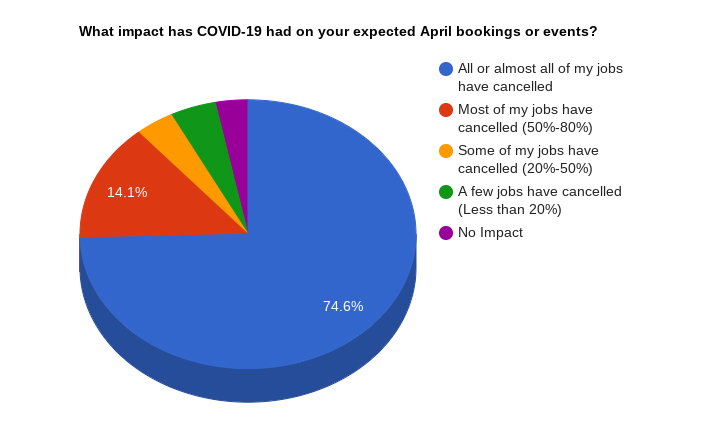
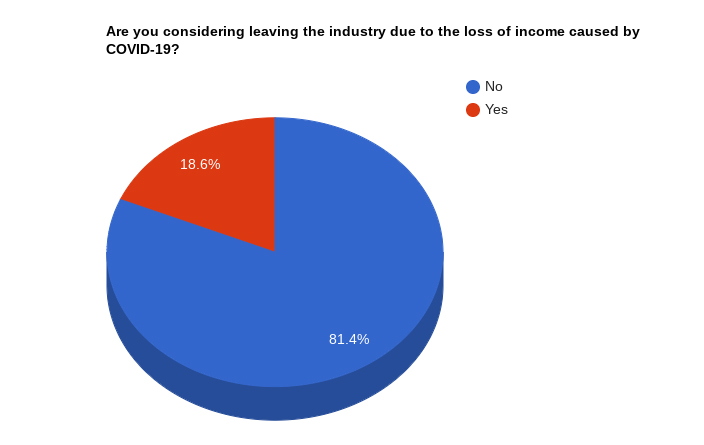
At the beginning of the year Lensrental carried out a survey with over a thousand professional photographers and filmmakers and found that 74.6% had lost all or almost all of their upcoming jobs in the month of April due to COVID- 19. As well as 18.6% stating that they would be leaving the industry due to the loss of income caused by the pandemic. A lot of photographers have had to lower their service charges just so that they can stay ahead of the competition during these hard times. Unfortunately, the coronavirus pandemic has led to over 170,000 job loses across the UK according to The Telegraph. It has affected so many businesses and led them down the path to closure. What we are currently facing is an economic challenge.
There have been four major industrial revolutions that changed the world: Mechanisation, Mass Production, Automated Production and New Technologies. Photography started emerging during the mass production revolution in the 1870s. It was used primarily as a way to record process, machinery and final products. It would later move into corporate and commercial photography such as advertising company products like it is predominately used in todays world. Now, during the fourth industrial revolution of new technologies such as artificial intelligence and the Internet of Things, photography has once again changed. The question is, has it changed for the better?
Nowadays, photography isn’t just about DSL cameras, there are drones, tablets, GoPros, and many other devices used in the world of photography. However, the newer cameras do allow photographers to use this technology to better enhance their quantity of photographs rather than focusing on the quality like they used to with the older models, which I personally would see as an upside. Although, these advancements are making it easier for amateurs to take professional level photographs. And businesses are using this strategy as a way to reduce the costs of having to hire professional photographers. Phone cameras will inevitably become more and more popular in the industry creating thousands of job losses across the globe. The Bureau of Labor Statistics discusses how businesses hiring freelance photographers rather than hiring their own photographer nowadays will result in a reality where it will become very difficult for photographers to find steady jobs. ‘The employment of photographers is expected to decline by -6% between 2016 and 2026.’ – The Bureau of Labor Statistics.


Social media plays a huge role in todays society. Almost everyone has a form of social media. And now with the newspaper industry dying and moving towards online publishing , it could mean the end of a very long tradition which could anger a lot of the older generation and lead to a drop in sales for hundreds of companies such as The New York Times, Vogue and many others who rely on customers buying their papers/magazines. Thankfully, there is still a niche market who prefer a personal touch that experts can create with their own unique styles that less qualified individuals with their phones simply cannot.
On a positive note, the growth and popularity of social media has been very successful in attracting customers and gaining customer feedback for businesses. It has expanded the depth of market research that can be carried out, which also has reduced marketing costs. It is now easier to create networks and collaborations with others across the world. One of the best benefits of social media for a photographer like myself, is the promotion of your work for millions to see. This is one of the key elements I must have in order to get myself recognised for future placements and jobs by putting myself out there. One of the best ways to improve this skill is simply through experience which I have thankfully had the opportunity of doing through my university course and other placements while at school. Without the skills, knowledge and understanding of how social media works and its impact on the future of work some may struggle to keep up with the ever changing workplace environments.
My current goal is to create my own unique style and to put myself out there. In order to do this I need to build up my social media presence and start creating profiles such as VSCO which should inevitably start promoting my work. I had previous experience with social media while on work experience at an interior designer back in lower sixth. I hope to build upon this while on placement this year, so that when it comes time for me to enter into the world of work I will have perfected my social media skills.
I have been applying for placements this year at places such as art galleries and businesses who are looking for marketing/PR interns. Ultimately in the future I would like to end up working as a photographer for an advertising agency. The Bureau of Labor Statistics (BLS) stated that ‘the median annual salary earned by photographers, in general, was $34,000 in May 2018’, which works out at around £26,000. According to Michael Ray Photography, these are the main skills needed by commercial photographers to succeed:
- Mastery of Photography Equipment
- A Good Sense of Composition
- The Ability to See and Understand Light
- Imagination / Creativity
- Marketing
- The Ability to Get Along With People
- Self-Motivation
- Dependability
Personally I think most of these skills would apply to an advertising photographer as well. However, I do feel as though there are more important skills you need as these would typically be expected from any photographer.
The competition for advertising agencies nowadays is very intense. One of the key skills required for that role is confidence. Over the past couple of years, I have felt my confidence grow as I moved through university; giving presentations (both during class and online through the first lockdown), working in groups, being the main speaker and multiple other elements within my life including job interviews. I would have to say that my confidence was truly boosted when I signed up to work for Farm Weekly. Which for the past three years I have continued to do, reaching out to passers-by and trying to convince them they should purchase a paper at the annual Balmoral shows. I do however know that I must have the highest level of confidence in all aspects relating to this role.
35% of core skills will change between 2015-2020. The top 10 skills over the past 5 years have changed slightly to focus more on peoples creativity and how they work with others including: emotional intelligence, coordinating with others and people management. I believe that the world is changing in a way that is bringing people together and jobs now are associated more with creative and people orientated skills.
A skill which is often forgotten about and which I have little experience with is money management. Typically, as part of an advertising company you would be given a budget for the year or per project. I hope by gaining this skill in a placement I can learn to effectively maximise my available resources and keep future marketing costs low.
I like to think of myself as a persuasive person. Advertising is all about persuading people to buy something from you. From years of working in customer service based roles, I have found that the best way to sell something is to convince the consumer that they need the product and that it would change their life. What I think will be the hardest part of this process is trying to portray this need within photography. A lot of work will have to go into my future projects, especially when it comes to the research side in order to get the most out of my time and effort and to try and connect to as many people as possible . There is always room for improvement and in this case this could be through experience with problem solving and even things such as debates/disagreements.

A great way of building networks is through a professional association (body). I have recently been researching into this way of kickstarting my career. It can help enhance your CV as well as gaining knowledge, experience and skills required for your chosen career. If I continue down the path I have set out for myself I could end up completing these training courses after I graduate rather than complete a masters degree. In order to accomplish my goals I must meet a set of guidelines that I must set for myself.
Due to shifting labour demographics we must all change to become more flexible, agile and be prepared to deal with any future changes, especially while on placement. One of the most important changes is the ageing population across the world which is resulting in organisations who want younger recruits even though the retirement age is set to reach ’67 gradually between 2026 and 2028; a further rise to 68 is due to be phased in between 2044 and 2046′, according to The Guardian Newspaper in October 2020. This makes it harder for older people to remain in jobs or to even get a new one as most companies simply do not want older recruits due to the stereotype that they aren’t up to date with the latest technologies. Below is a link I used to check the current age I will begin to receive a pension and can retire:
https://www.gov.uk/state-pension-age
In order to keep on top of things in a business they typically use a continuous professional development plan (CPD). For an individual it can be a way of recording and reflecting on your development as you move through your career path. Below I have included a screenshot of a small portion of my personal CPD where I discuss what I am aiming to achieve in the near future and how I would go about doing that.

There are always going to be economic challenges that people and their businesses are going to face. As I stated in the beginning there are low barriers to enter into this sector which is allowing amateurs to enter into the field. Suzy Tiernan wrote in her book stating that ‘In the UK there is an even playing field, absent of dominating competitors and mainly made up of sole traders and small businesses.’ This is a good opportunity for me to try and get into the industry before it becomes overpopulated by large corporations. On the other hand, an opportunity for the sector is in fact related to technology. Rental studios are now fully set up with equipment that is required for photo shoots, making it easier for photographers to arrive at the studio with the models and not have to spend a huge amount of time setting up their own equipment.
The commercial demand may affect the economic growth of the industry vastly in the future. This is due to wealthy individuals or businesses who are likely to hold events that require luxury photography services which in the long run will not end well, simply because of the dependency it has on these types of consumers.
From here I plan on moving forward with my career development and hope to have a placement within the next month. Due to Covid it has been slightly difficult to find a placement with some businesses even closing their placement opportunities for the foreseeable. After this I would like to finish my final year at Ulster and consider moving towards a professional body after graduation or finding a role within an advertising agency.
Further References
References
Church, M., 2020. Advanced Technology In The Workplace: A Look Into The Future. [online] Training Industry. Available at: <https://trainingindustry.com/blog/remote-learning/advanced-technology-in-the-workplace-a-look-into-the-future/> [Accessed 30 October 2020].
Clok.uclan.ac.uk. 2020. [online] Available at: <http://clok.uclan.ac.uk/23003/4/Grafters%20press%20release.docx> [Accessed 30 October 2020].
Contrastly. 2020. Is Photography A Dying Profession? | Contrastly. [online] Available at: <https://contrastly.com/is-professional-photography-dying/> [Accessed 30 October 2020].
Experts, A., Bilici, A., Bilici, A. and Experts, A., 2020. Building A Sustainable Art Career – Agora Gallery – Advice Blog. [online] Agora Gallery – Advice Blog. Available at: <https://www.agora-gallery.com/advice/blog/2016/07/21/build-an-art-career/> [Accessed 30 October 2020].
Life In Focus. 2020. Tech Today Archives – Life In Focus. [online] Available at: <https://focus.mylio.com/category/tech-today> [Accessed 30 October 2020].


 Niamh Whyte